
“All I hope to say in books,
all that I ever hope to say,
is that I love the world.”
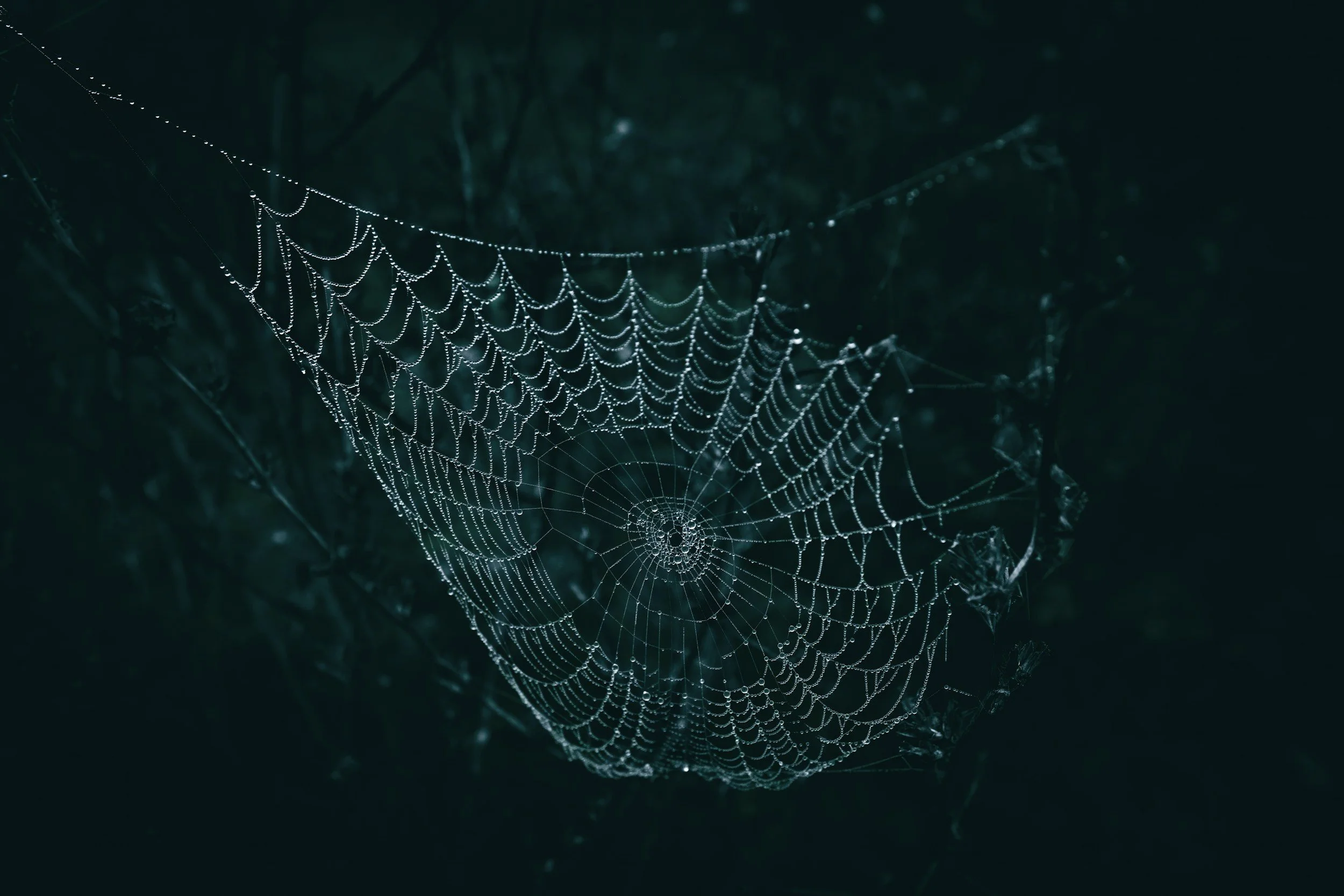
Twenty-four years ago a beautiful edition of Charlotte’s Web came into my life. Hardcover, colour illustrations, a font so large I will undoubtedly be able to read from it when I am 90. The endpapers are a white dew-touched spider’s web on a black background. Here is Fern, page 2, ready to battle her father and his ax to save a runt pig from death.
“Please don’t kill it!” she sobbed. “It’s unfair.”
Mr. Arable stopped walking.
“Fern,” he said gently, “you will have to learn to control yourself.”
“Control myself?” yelled Fern. “This is a matter of life and death, and you talk about controlling myself.”
Tears ran down her cheeks and she took hold of the ax and tried to pull it out of her father’s hand.
“Fern,” said Mr. Arable. “I know more about raising a litter of pigs than you do. A weakling makes trouble. Now run along!”
“But it’s unfair,” cried Fern. “The pig couldn’t help being born small, could it? If I had been very small at birth, would you have killed me?”
Mr. Arable smiled. “Certainly not,” he said, looking down at his daughter with love. “But this is different. A little girl is one thing, a little runty pig is another.”
“I see no difference,” replied Fern, still hanging on to the ax. “This is the most terrible case of injustice I ever heard of.”
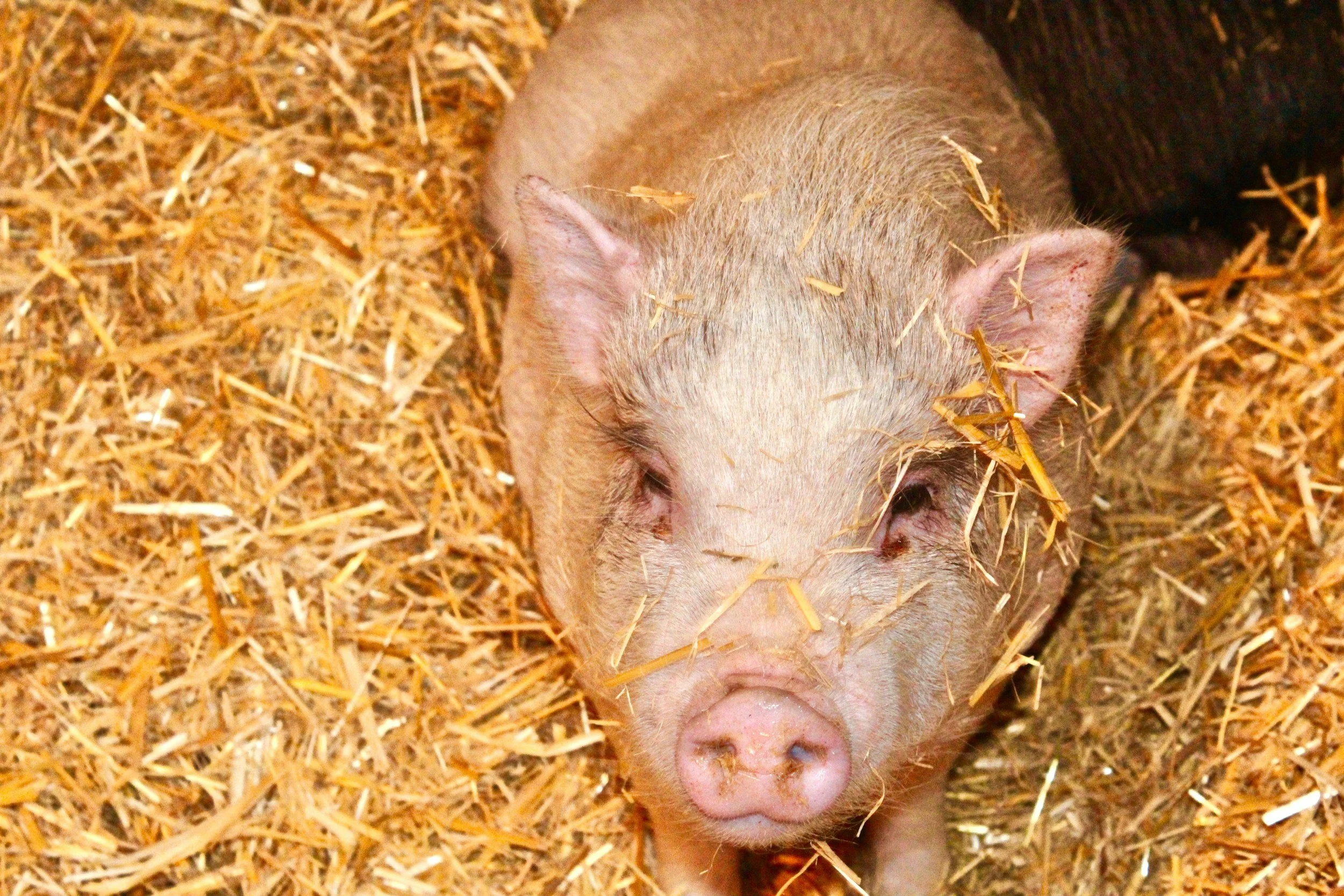
Charlotte’s Web was the first book I bought myself. I was nine years old in 1975, in the third grade at St. Peter and Paul Catholic School in Easton, Maryland. The movie came out in 1973, but I don’t think I saw it. I was enthralled. A black and white photo of me on the couch, in a cone of light from the lamp next to me, shows me with the book opened mid-way, paused to perform for the camera. One leg kicked high up, a hand raised, too, and a big smile. I read the book over and over. My first chapter book. A book written for me.
The afterword of this signature edition tells the story of White turning down a prospective film-maker. Charlotte’s Web, he wrote, “is not really a satire…but essentially it is a hymn to the barn. It is pastoral, seasonal, and is concerned with ordinary people in, for the most part, ordinary situations.”
A song for me. An ordinary girl. A girl who did not live on a farm, but in an old two-story house with a graveyard out front where people who died from the smallpox epidemic in the 1700’s were buried. Behind the back porch, a dock stretched into the wide, wide Harris Creek which led to Chesapeake Bay and if you had a good boat, you could travel south and then east and end up in the North Atlantic Ocean. We lived two years here, at the end of a dirt driveway that stretched 1/4 mile. We picked up our mail at the Bozeman post office. We drove 30 minutes each way to get to school.
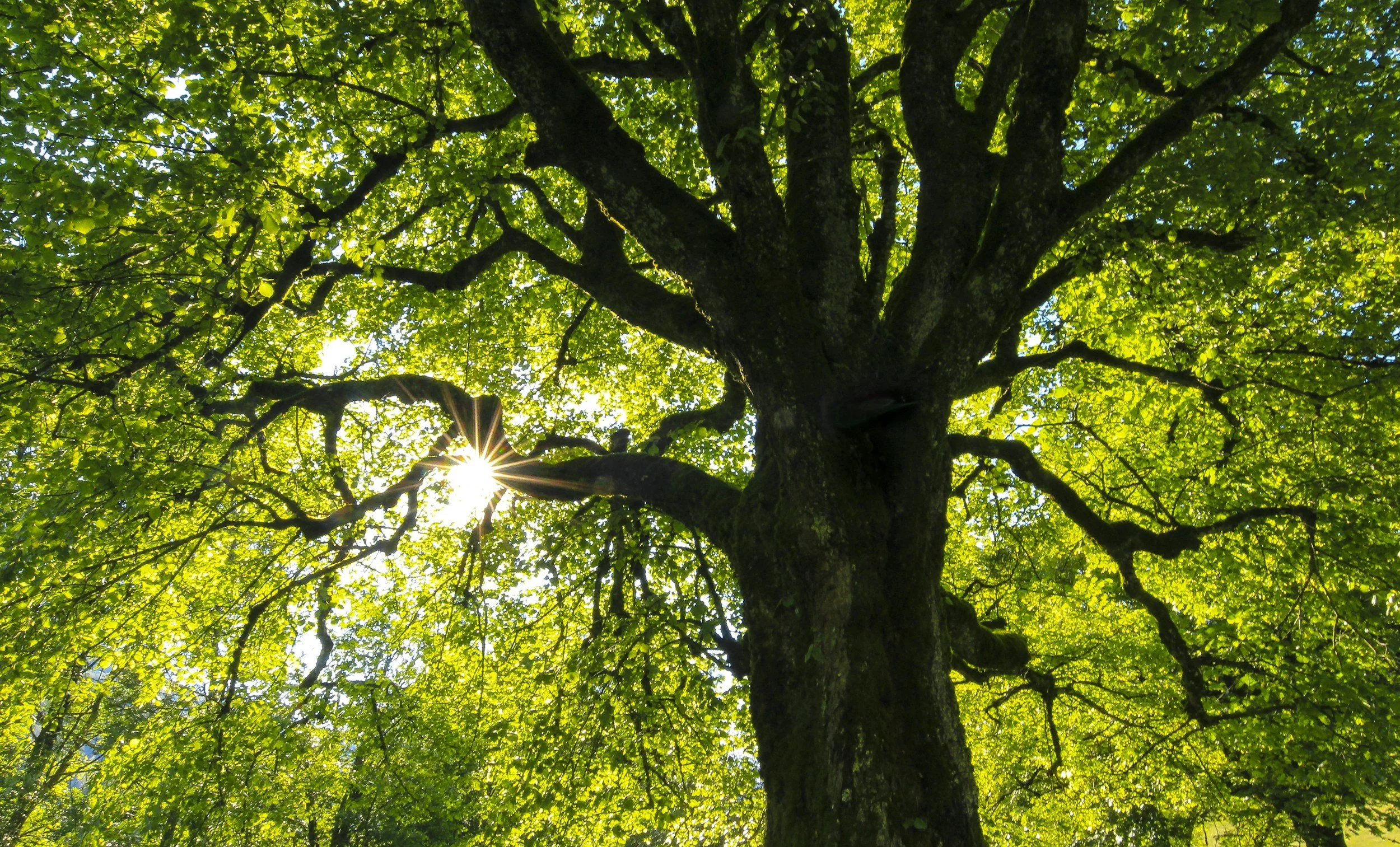
I made friends with two great oaks I talked to when I climbed out my bedroom window and sat on my red chair on the porch roof. Massive snakes, 6 feet long, shared their stories with mine, on land and in the creek. Deer sprinted through or grazed in the huge fields surrounding us. A ring of cedar trees near the water were my trusted friends and protectors. Jellyfish and crabs showed up in the summers. We lived with the seasons for those years. No neighbours nearby or playgrounds, we played outside; we built forts, scavenged duck decoys and old bottles from the slough. I was nine, my sister 7, and my brother 5. It was idyllic and it was not all okay.
Violence erupted in this home, this story of the nine-year-old girl who read Charlotte’s Web and made friends with all the life around her. Harm happened to the girl who lived in this family.
Her stories saved her, in a way. Each moment had more than one relationship. This girl’s awareness was not confined to what was expected of her by her parents. The natural world balanced life for her. Violence, heartbreak, betrayal, lies and love, listening, soothing, nurturing.
I am aware of the Epstein files. I have experiences which remind me how difficult it is to break free when you’re dependant on a community of people, when you’re isolated from others you might trust, when you’ve made a deal, cast your lot, joined in on a conversation. I’ve experienced manipulation, coercion, broken promises. As a child. As an adult. Recipient and sender. We all live in these rhythms of violence and grace. This is humanity, now. No need to despair. No need to hide. Instead, we must take great care and gather. We must reach for balance. The balance of war, of violence, is action through the lens of love.
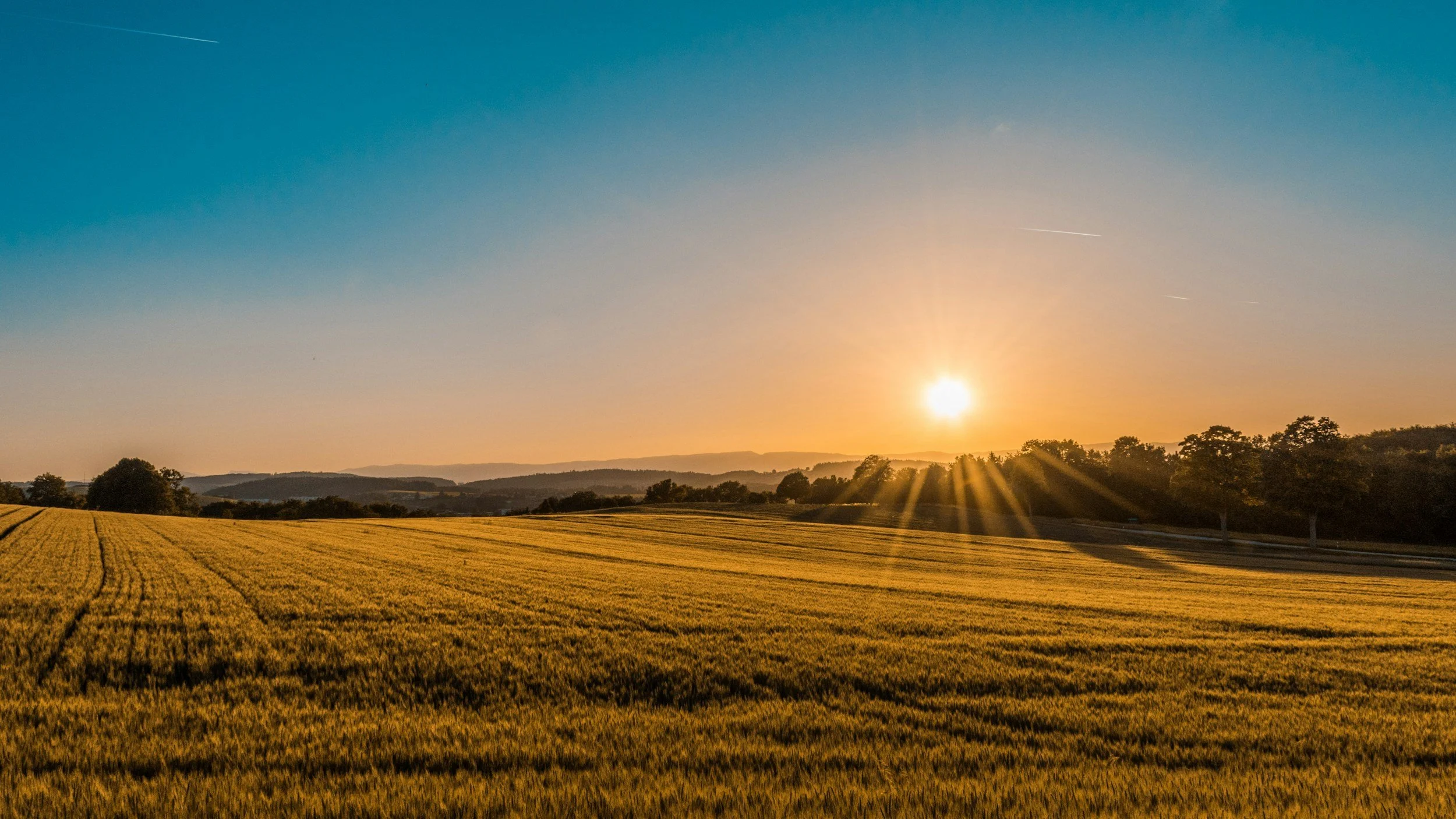
I’ve lost my love for the world many times since the events of my childhood; sucked into a trance of trying to make life beautiful/better, I created new stories of great responsibility and care for others and tried to leave myself behind. Eventually, my body got sick from the lack of care. Eventually, I stopped trying to make a new story and focused on the day in front of me. I walked outside for hours each day. I committed to walking to a ridge to view the sunrise each day for a year. I started to see beauty in the rhythm of a day, no matter what happened. My fear worsened and lessened. Nature encouraged me to walk towards the rhythms of my life, whether memories of violence or betrayal.
Nature assisted me in seeing the beauty of the transformation. The greening at the end of the branch of an apple tree, the white blossom, the scent, the aliveness, and the falling of the petals to the ground. Apples! Food for many. And, then, back to branches surviving the winter. Each time a memory/the energy of violence arises in me, I move among the trees, under the clouds. I take long trips, weeks at a time, out in nature to reset my system. To remind me of who I am. I walk with my bare feet on the earth. I imagine and I feel the connection between the soil and the root and mycelium and the tender arch of my foot, the steady roll of heel to toe.
A seasonal life is one which sees each stage as beautiful in its own way. Violence brings opportunity for balancing with peace, as long as we are not stopped by fear. The potential to respond to the world from a place of balance is available to us. And one person’s peace has a huge impact.
“Where’s Papa going with that ax?” Fern asks her mother.
Her mother responds, “One of the pigs is a runt. It’s very small and weak, and it will never amount to anything. So your father has decided to do away with it.”
“Do away with it? You mean kill it Just because it’s smaller than the others?”
“Don’t yell, Fern! Your father is right. The pig would probably die anyway.”
She runs outdoors, the grass is wet, her sneakers are sopping by the time she catches up with her father.
The image is of him, holding the ax close and her, reaching up, both hands on the ax. He is surprised. Sure, he is also angry at her. He is the one with the power. AND, her mother is on his side, believes he is right.
I pleaded with my father not to hit me and he still did. My mother sat next to him on my bed and me, bent over his legs, my butt bare. I pleaded and pleaded for them to stop. I told them they were crazy. He believed strongly it was his right, his duty, his obligation and, unconsciously or consciously, the only way he could control me. He told me once he raised me to be perfect. I can only imagine the pain of his own childhood because he reports it as being perfect. Violence in the home is prevalent in our collective humanity. I don’t know if I’ve lived up to my father’s dream. Fifty years after the nine-year old me pleaded with her parents to stop, I set down the burden of trying to understand my father and convince myself I was a good human. I accept many adjectives for myself and for him and for all humans I meet: flawed and messy and brave and beautiful. What is most important now, is now. This moment.
If I could tell the victims in the Epstein files a few things, I’d say, “You are more than this story. Your wholeness can hold this story and many others. Slow down. Turn off all communication devices and walk, dance, sing, hum, garden, paint, play with clay or a musical instrument, until you feel your body. Simplify your life. When your mind and your nervous system relax, you find a freedom you have always had. Notice. Notice deeply in whatever you do. This deep noticing helps widen your perspective.”
I know women and men all over are aware of the Epstein files and I know the potential to be lost in memory or attempting to block out memory of violence, harm, betrayal, coercion and lies. Collectively, our humanity is facing a deep wound of harm and a rebalancing is necessary. Each one of us can participate in the rebalancing through peace practices. The change is happening. We can stand in our own shoes. Our peace matters.
Our attention is an action. Let our attention be an action of love, of deep care.
If you are interested in deepening your practices of peace, please reach out to me. Momentum is gathering. Let’s practice and learn alongside each other.
The Academy of Life as a Learning Lab is taking shape. We are calling in all our favours, all our friends, all our ancestors.