Sleeping. Waking. Experiencing. Begin again.

This morning I rise to an awareness of the future changing.

My daughter and son-in-law travel towards us, back in time from Iceland to Canada, from Toronto to Calgary.

The girls, giggly and buzzing with energy, move from room to room, exploring their world anew, picking up toys and books, putting them down. I look around at the tasks before me; sorting, putting away, cleaning, polishing. A sense of not-now descends. Like a pebble falling into a deep pool of water, I settle with a cup of coffee nestled between my hands. Such comfort, this morning ritual.

I sit in a comfy chair, the sun through the front window projects the shadow of a huge lilac tree onto the floor, the side of the couch. Squirrel shadows jump from trunk to trunk. Athena, full-bellied, sleeps. Tom reads the news on his phone. I remember when this ritual included a newspaper made of newsprint.

I remember back and back to when I was small, my mother’s Maxwell House instant coffee, evaporated milk, and a spoon of sugar ritual. I remember sitting with her while she read the newspaper. Me, with the comics. I feel a warm belly recalling this memory. Comfort. Ease.

Sloane tells me her favourite time of day is sleeping time. Falling into rest. I can relate, more and more to looking forward to night journeys. As I wake, images and symbols come to me and a sense of comfort remains. Gratitude fills me.

This morning ritual of sitting with coffee and the weather of the day is becoming an extension of the night journey. A space of time between sleep and “doing”, a time of “being”.

I wonder when I will add a late afternoon nap to my routine? I wonder if we all, like I did in Kindergarten and Grade One, would benefit from a quiet time, breathing with awareness of the stillness inside?

Tricia Hersey, founder of The Nap Ministry, writes:

This is about more than naps. This is about more than naps. This is about more than naps.

This has been my battle cry and mantra since I created the “Rest is Resistance” framework in 2016. I begin experimenting with rest as a tool for my own liberation and healing in 2013. It has always been about more than taking a full nap. My rest as a Black woman in America suffering from generational exhaustion and racial trauma always was a political refusal and social justice uprising within my body. I took to rest and naps and slowing down as a way to save my life, resist the systems telling me to do more and most importantly as a remembrance to my Ancestors who had their DreamSpace stolen from them. This is about more than naps. It is not about fluffy pillows, expensive sheets, silk sleep masks or any other external, frivolous, consumerist gimmick. It is about a deep unraveling from white supremacy and capitalism. These two systems are violent and evil. History tells us this and our present living shows this. Rest pushes back and disrupts a system that views human bodies as a tool for production and labor. It is a counter narrative. We know that we are not machines. We are divine.

Slowing down. Resting. Waking up to a slow routine, a quiet remembering, may change our lives. How do we make room for quiet? for stillness? What do we do as individuals, couples, families, communities to connect with stillness?

More questions.

Much love, Mar’ce

Waking up.

I rise this morning a 7:45 a.m., the sun is up.

A series of images came into my awareness just before waking: a tree with expansive and far-reaching branches, a wide river, streaks of clouds in a blue sky. Sounds emerged, too: a deep bass sound and the calls of Raven and Chickadee. The colour yellow came. The colour Red showed up.

I miss being outside each day for hours. I miss sleeping in a tent. I miss the sound of waterfalls or a creek churning nearby.

For now, I have work to do in other ways. Soon, I’ll find a balance again. Until then, I’ll visit earth and sky and water in my dreams.

Warrior Women

I rise this morning thinking of warriors. Women warriors. Male warriors. Non-binary warriors. I know many of them. I rise this morning looking for inspiration from warriors. I need to make peace.

I don't speak often of the word Warrior, worried I’ll be misunderstood or rejected for being too ________ .

***

Most of the representations of warriors I’ve encountered in film/television media have been embroiled in extreme violence and lots of blood. Years ago, I watched Spartacus, a show which used over 300 gallons of fake blood per episode, (Kill Bill spilled over 450 gallons of tinted corn syrup. On Stranger Things, Eleven, played by Millie Bobby Brown, “bleeds” whenever she uses her special powers.)

I watched Spartacus through a triangle space between my third and fourth fingers. Among many male warriors, three women warriors with on-screen lives battle for survival in Spartacus: Laeta (Anna Hutchison), Saxa (Ellen Hollman), and Naevia (Cynthia Addai-Robinson). Addai-Robinson said of the show’s popularity, "The show is known for the sex and violence but what keeps viewers coming back are the relationships and the love between the characters."

This viewer did not watch the show for the relationships or the love between the characters. This viewer watched three seasons for the physical embodiment of warrior, for an experience of facing what I did not want to believe was true- all the violence, all the justified killing, all the ways we kill each other’s culture. I’ve also watched Game of Thrones and Vikings– often with my hands blocking out sound and/or image. These shows represent the stories of some of my ancestors. I am part them.

Splatter horror is part-art and part-craft. Create a visceral reaction in the audience and you allow them to experience horror from an emotionally secure view. Interesting research– in countries with higher GDP, the consumption of horror movies is higher. Perceived resource scarcity, the study’s authors conclude, lowers the sense of control viewers experience, leading to lower consumption in horror as a genre. From my emotionally secure view, I experienced the violence as separate from me, but I still felt it in my body. I still needed to shield myself at times, comfort myself at others. Rarely did I feel joy in anyone’s victory.

***

I’m confused by the word warrior. Etymology online (a resource I often access) says the word warrior comes from the French: c. 1300, from Old North French werreier (Old French guerroieor) "a warrior, soldier, combatant, one who wages war," from werreier "wage war," from werre (see war (n.)).

A little over 100 years after the word warrior came into use, Joan of Arc, a national heroine of France, led the French army in victory at Orléans in 1429– defeating the English’s attempt to conquer France during the Hundred Years' War. Joan of Arc was a peasant girl who believed she acted under divine guidance.

What choices did the “Spartacus” women have in 73 BC to 71 BC? What choices did Joan of Arc have in 1400? How has our language been shaped by the events of our lives? How does our language shape the current events of our lives?

Could being a warrior (female/male/non-binary) mean something different than “one who wages war” like the portrayals I’ve seen on the screen? How do other cultures define warrior?

Warrior, from the Tibetan word Pawo, literally means one who is brave.

***

Compassion, "feeling of sorrow or deep tenderness for one who is suffering or experiencing misfortune," mid-14c., compassioun, literally "a suffering with another," from Old French compassion "sympathy, pity" (12c.), from Late Latin compassionem(nominative compassio) "sympathy,"

The Tibetan term for compassion is nying je, which the Dalai Lama states, "connotes love, affection, kindness, gentleness, generosity of spirit and warm-heartedness." People with these traits want to help others who suffer.

***

What if warrior and compassion were coupled in a female/male/non-binary being?

All morning I’ve been contemplating this notion.

I experienced a period of anger last night which had my body electrified with a pushing-away kind of energy and my mind racing for a couple of hours. The anger felt powerful. Strong. Piercing. My words did not feel kind or generous or gentle in my body. The reaction of the recipient of my anger, “Why are you being so mean?”

The story I told myself: I was angry at an obstacle in my path-to-being-good and being-seen-as-good. The person I directed my anger towards, and my sincerest apology soon after my outburst, showed up with a compassionate response of love. I felt shame afterwards, and guilt. And gratitude. And forgiveness. I had temporarily lost my ability to discern the appropriate response to my anger.

We beings are capable of so much. Our bravery and our compassion can help define what we do and how we live.

Much real blood is being shed at this moment. Many warriors are in action at this time. Some are blindly waging war, others are facing the truth of oppression/domination/violence with discernment, bravery and compassion.

I’m still at the beginning of this path of understanding. I am not an authority in any way. I’m a questioner. This is my questioning. This is my call out to you, dear reader. I’m interested in listening to your warrior stories and questions. How do you come to be a warrior? What is your physical experience of warriorship?

Many of my ancestors were fighters; French, English, Irish, Viking. They waged war for what they wanted. Some viewed other persons as disposable obstacles to their want. The shame and guilt they also experienced may have created a code of silence. Others viewed other persons as part of a necessary whole to make peace among all beings.

And what do we do now, I wonder, with the way the world is, with the world my ancestors left us, with the world my grandchildren will inherit?

In my first family, we let pain remain unheard, we actively resisted facing painful events and truths. So much shame. Our concealed suffering erupted eventually, like an earthquake, separating some of us from the others.

How does a warrior face suffering with bravery? This is my question today.

Morning Wandering Through Words.

The Wisdom Engines are tools for “consciousness hacking”. The metaphysical and ontological ideas regarding the nature of being, existence and truth embedded in these drawings has the potential to disrupt and enliven the general field in which they are experienced. This one is called Riverspine.

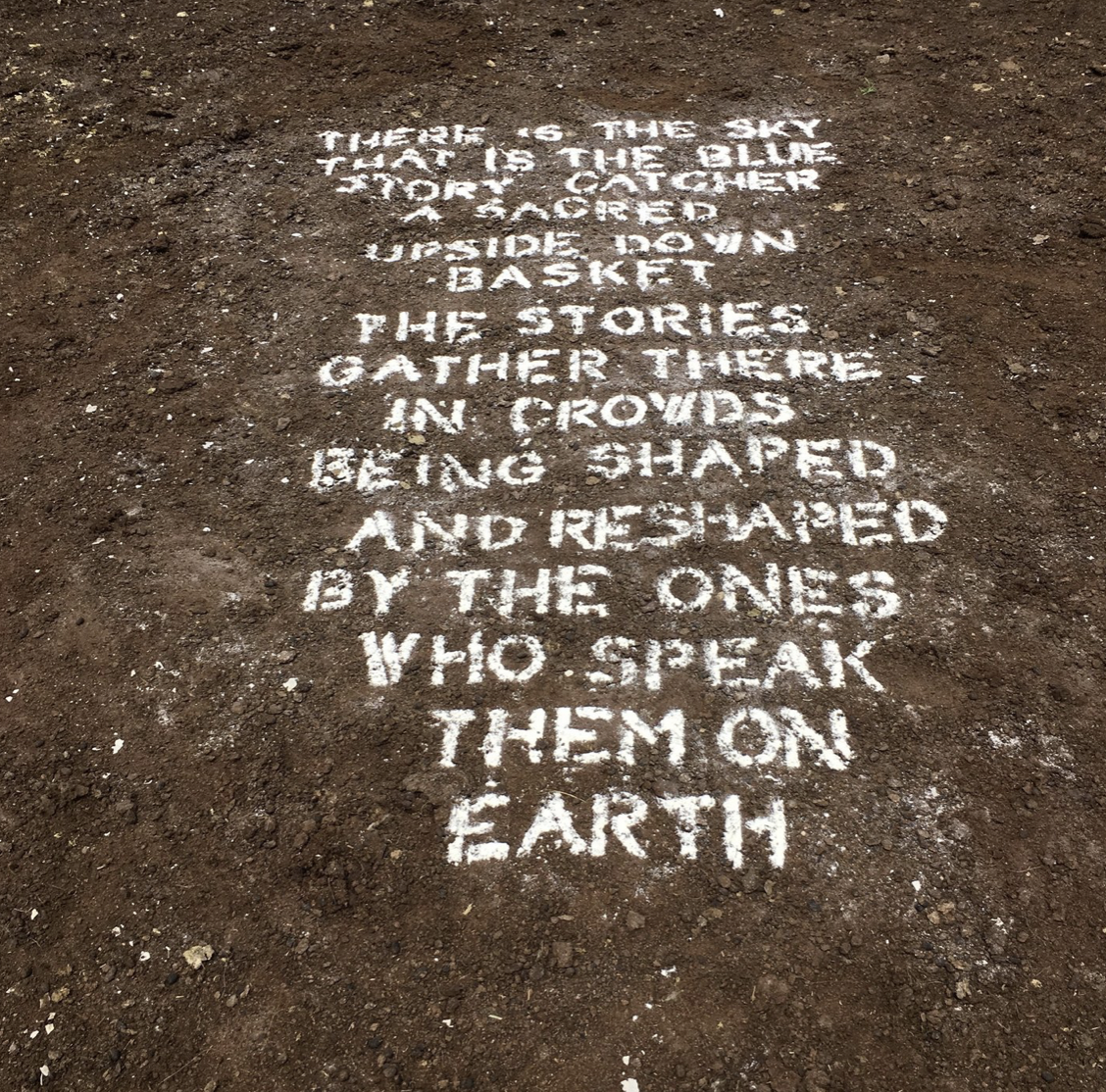
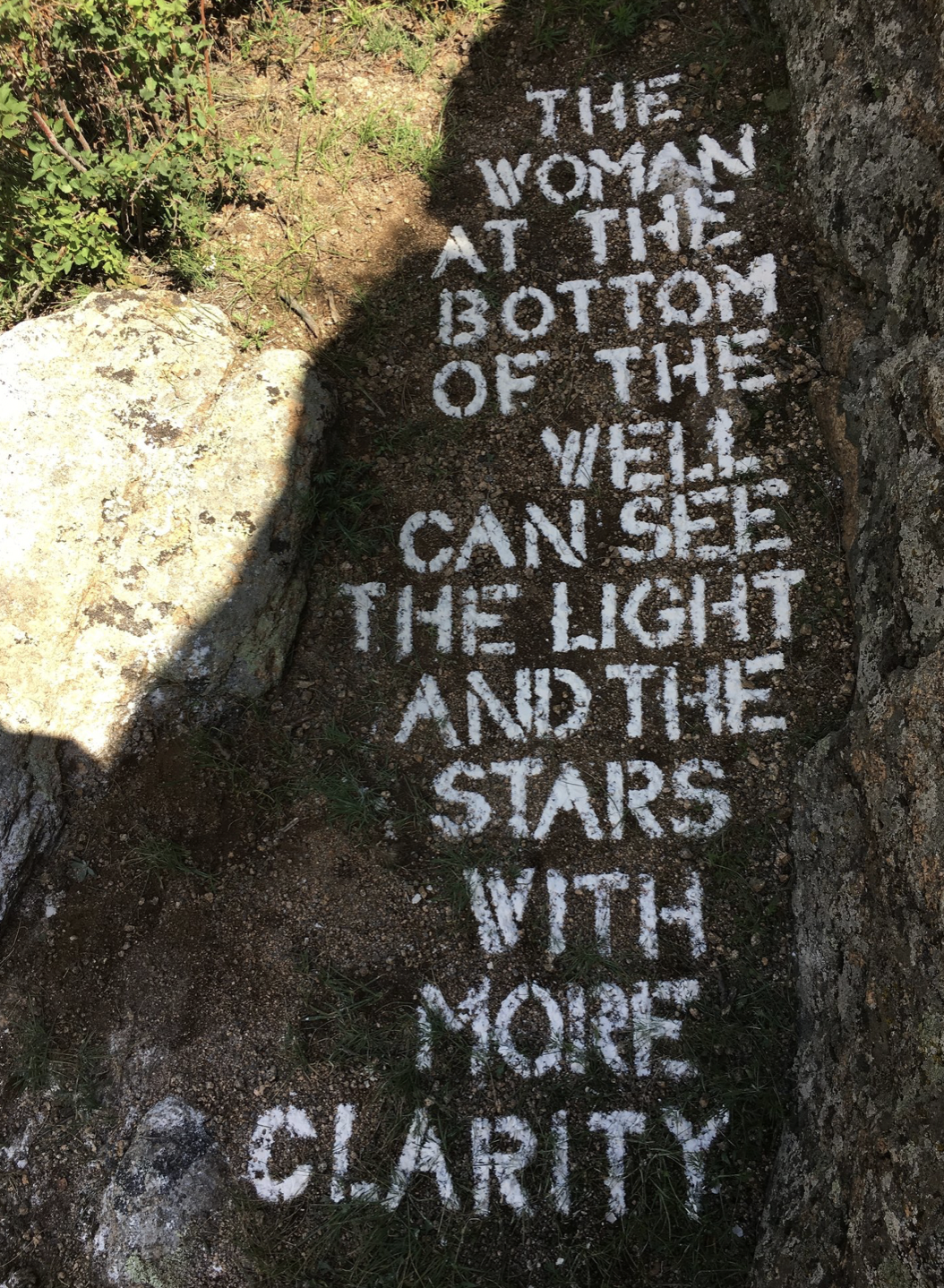
Story Keepers was made in Murun, Mongolia at the invitation of Land Art Mongolia Biennale 2018.

Written on Skin: Concentric Stories was a ceremonial or ritualistic process of writing 7 stories as offerings to and on the land.

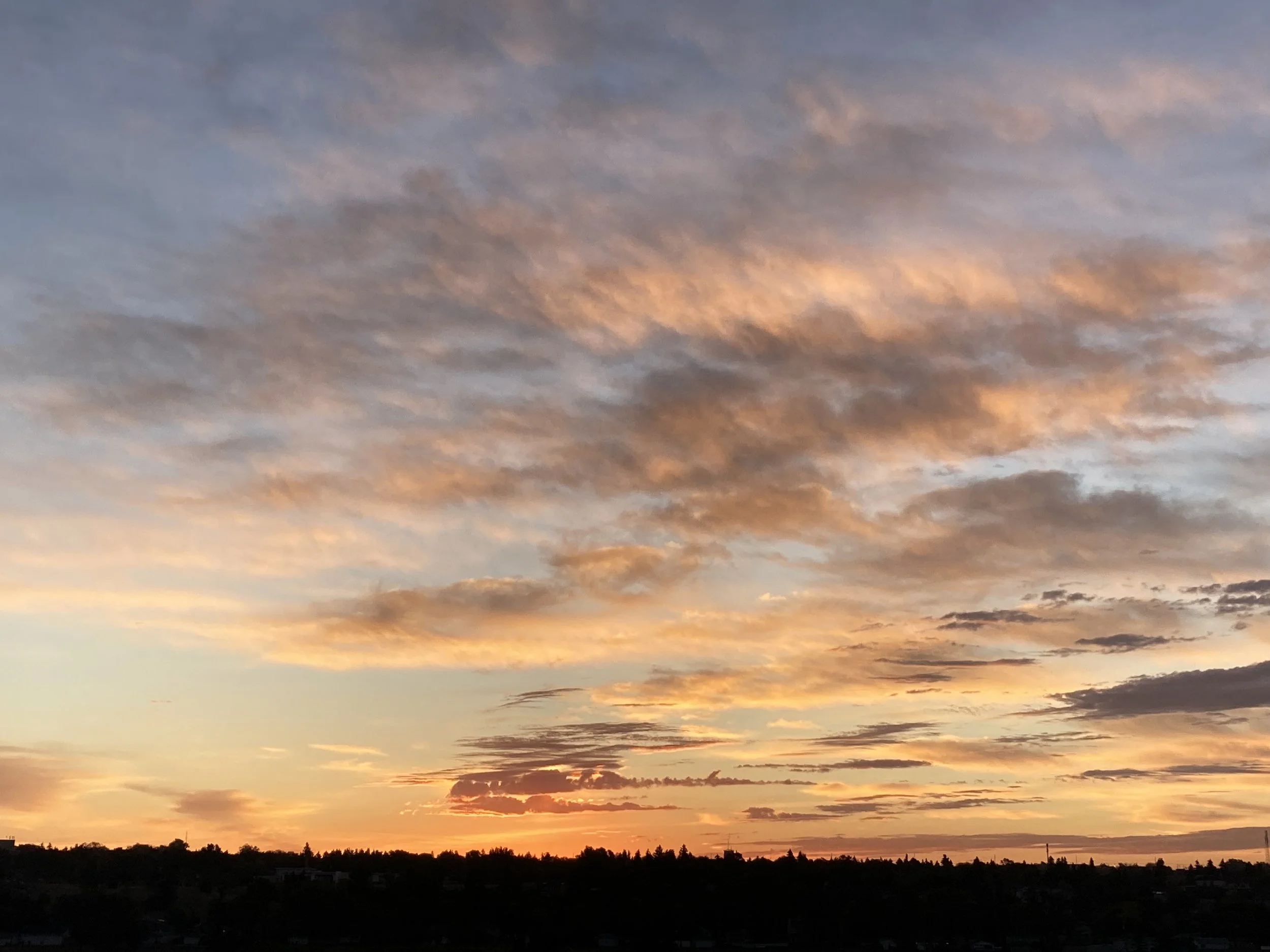
This morning I rise at 7 a.m., just in time to watch the sky lighten from near-light to light. Now, the sun sends long shadows into the yard. The air is a kindly-cool. The promise of yellow leaves on trembling Aspen groves comes with the wind. Among the mountains, the Tamarack and Larch seem to gather for a celebration of cooler wind, longer nights– preparing, perhaps, for the darkness of the winter season.

This morning I read Maria Popova’s offerings about a visual artist from Slocan, British Columbia, a region of the world I’ve visited in the summers, enjoying the heat of the day in contrast to the icy cold water– even at the end of August, I last only a few minutes swimming .

Tanya P. Johnson swims in the waters I have dipped into with tremble and shriek. I’ve only discovered her work today and I’m curious. In her bio she writes of sharing her life with a black dog, and says she is “drawn to the random, is fierce about justice, likes foxes and dislikes locusts, sharks and oppression.”

I viewed the pieces of her work I’ve included in this post with quiet stillness. I noticed a warmth in my belly, a waterfall down my back, a smile in my heart.

I wonder your reaction, dear reader?

I wonder your reaction, dear reader?

I wonder your reaction, dear reader?

***

I read, too, an interview with Elizabeth Strout. I devoured her books, Amy & Isabelle and Olive Kitteridge. Here are a few sentences she spoke which speak to me:

“I love to write,” she says simply. “I want to connect with somebody so that they can see their life in a different way even just for two minutes, or have some momentary sense of transcendence, as though the roof were a little higher for a few minutes. And they can look around and they can say, ‘Oh, right, it’s just life, it’s just life.’”

Intent may be everything or it may be a bit of something which propels, which causes a spiral to begin. It may vary with the intender. It may vary with the attention, the attunement, the awareness of the intender.

I wonder, dear reader, your reaction?

I wonder, dear reader, your reaction?

I wonder, dear reader, your reaction?

Fear. Fear. Fear

  1. Here is a fearful moment I captured on video. Athena is the puppy in our team. We are at Lake Superior. She loves to jump. She loves to catch sticks in her mouth, and carry them, and bring them, and find them. We want to be part of her excitement. We seek out opportunities to be triangulated with her love of sticks.

  2. Each time I watch this video, my stomach turns at a certain moment (if you watch it, you’ll know which one…)

  3. I try to let the fear rise and fall away.

  4. My novel, The Arbornauts, is part horror/part psychological suspense. I didn’t know this was the way this novel would go, but I am interested in the continual facing of fear.

  5. What is your experience of fear? What do you do to avert fear? How do you face fear? What is underneath fear? I’m asking myself these questions. Today. Often.

Athena grabs stick. Loses balance on the descent.

Fear. Fear. Fear.

Why I Canoe...

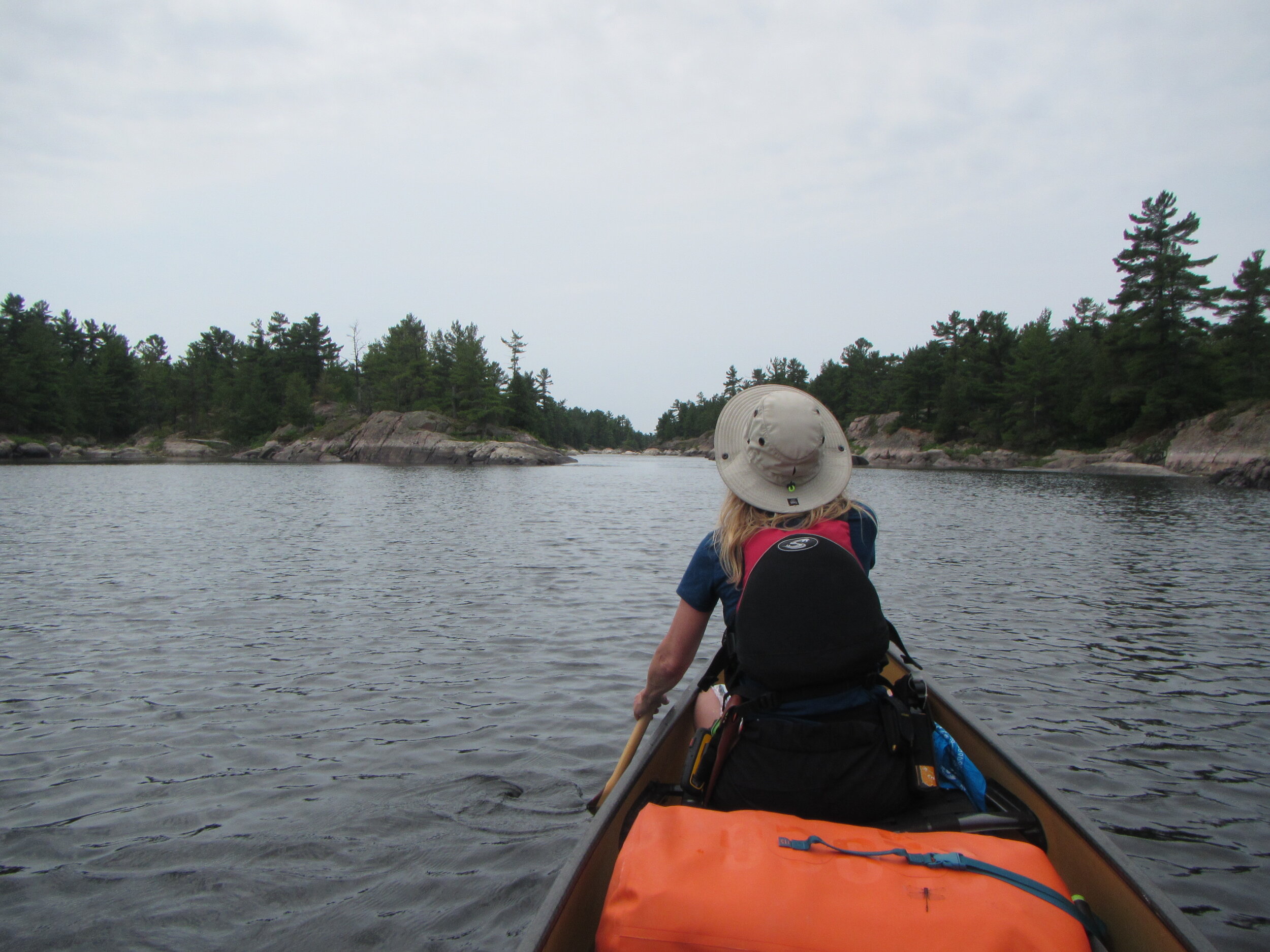
I rise this morning wondering what will happen with my day. I was going to be in a canoe today with a new friend I feel I’ve known over a lifetime, but the weather is shaky and she is recovering from a nasty bout of covid. I’m still tired from the canoe trip, too. Not fully unpacked physically or mentally.

This weekend we stayed out at Ghost Lake. Each day we threw sticks for Athena in the icy water and she retrieved them, over and over.

Last night we viewed some of the videos we’d taken during our summer canoeing excursions. Day three in Quetico (August 3), I talked about what I was afraid of (big wind/waves) and all the things I love: mushrooms, trees, water, wind, waves.

Last night I fell asleep to recorded forest sounds playing through my phone. I dreamed of standing on a shore, looking out over an expanse of water. No longer afraid. Now, waiting. I don’t know what I’m waiting for…

Ghost Lake shoreline with Theia.

Why do I canoe?

I ask myself this question often. Over and over I choose canoeing. Why?

I love canoeing so much, I want to “sell it” to everyone else. Why?

Here are some answers:

Level 1: Canoeing is adventure, healthy adventure. #72hoursinnature #significantlyreducesstressmarkers

Level 2: Communication required. Trust. Confronting fear. #healthyrelationships #facingfear #lifegoals

Level 3: Relationships with every thing is possible. #weareallconnected

Level 4: Today’s response: I canoe to make space in my existence for something else. Out of the routine of most of my days, I am in flow with the water, the wind, the land and the sun. In these moments, something else arises. The something else is a deepening relationship with the world. Each of my senses is tuned to capture more broadly, more deeply, the essence of what is. #whatishappeningtome #mindblowing

My context: I’ve spent many years attempting to fix what was wrong: with myself, with others. Self improvement seemed like the educated, eventually happy, woman’s path. Her hero’s journey was improving herself– everyone knew she was a hero just by looking at her: the clean house, glowing skin, fit body, successful children, gorgeous garden. Much of my life has been dedicated to shaping a version of myself others would love, respect, honour. Decades and decades of living, I felt I was being observed and each of my actions evaluated as good or bad. I frequently repeated as an antidote to the frenzied circling in my brain of all-the-ways-I-am-not-enough, “I love you. I love you. I love you.” I learned this from Oprah. An act of defiance against the observer.

Even though I thought saying I love you affirmations were likely bullshit, I didn’t have many other options.

Back then, I fell into bed at night, exhausted from the self-improvement practices, grateful for sleep to take over my mind and find some freedom from the watcher.

In taking care of others, I found an expression of self with the least amount of tension. My self fell away during the times I was needed- cleaning up children’s vomit, listening to a friend’s catastrophic life chapter, pursuing my employer’s objectives to change the world without realizing the falseness of their promise.

During these acts of giving my attention to others, I didn’t think about my stringy hair, my too-thin lips, the changing shape of my body. I didn’t worry about washing the floor each day, eating low fat food, worrying about money. When I was taking care of others, I didn’t exist.

I thought my care of others would lead to freedom.

I feel ashamed to say the truth: I hoped others would proclaim their love and devotion to me, so loudly and so clearly and so unconditionally, I would be able to relax into their love and not have to improve anything. I could simply be.

I canoe because it is a world where I can be without the noise of self-improvement, where the calling to help others quiets. It’s a world where my attention is tuned to the connection between the small me and greater possibilities of existence. Beyond self-improvement lies freedom. I find it in a canoe.

I read the poem Clearing by Martha Postlewaite this morning. I remembered how my need for self-improvement faded away the more time I spent in quiet with myself. I wonder if stillness is a kind of clearing in a forest?

Still in progress, I offer ideas for the reader’s consideration. I don’t know why. I am on the shore, perhaps, or in the forest clearing. This is my song this morning. I don’t need to improve it. Just notice, observe, and move from experience to experience.

Clearing

Do not try to save the whole world or do anything grandiose.

Instead, create a clearing in the dense forest of your life

and wait there patiently,

until the song that is your life

falls into your own cupped hands

and you recognize and greet it.

Only then will you know how to give yourself

to this world

so worthy of rescue.

~ Martha Postlewaite