The Universe is Expanding

Monday Night Friends Circle– a group of friends asked me to lead them in a writing circle for a few weeks: Sometimes we share what we’ve written between weeks. Last night we wrote during our circle: three segments of ten minutes each on three different topics:

  1. Write for 10 minutes about everything you know and can say for certain about the Universe, God and the Solar System.

  2. Write for 10 minutes everything you can say for sure is true about relations between human beings.

  3. Write for 10 minutes everything you can say for sure is true about yourself.

The humans are as stunning and brilliant and as interesting as their writing. I believe their experiences are preparing them. They’re so close to life and ideas about life in their 20s. Their story is immediate; they have lived outside their first family for a few years. At 55 I’m reflective about a long story. I remember my 20s as a time when I was curious and I believed change and education could save me.

I still feel young inside but I no longer believe I need saving. There is nothing to save me from…I am changing. I am alive.

The universe is expanding.

My son’s girlfriend is an astrophysicist. She studies exoplanets. She spots them. Uses data points to create models of expected trajectories, system qualities. So far no one has found a planet like ours or a solar system like ours. All the masters candidates in her department have one burning-like-peat-moss question: Where are the aliens?

Her name is Maggie. I love her. I’ve known her for four days. We had coffee together, in the space between sleep and movement. We walked along the ocean. The conversation was inspiring. I love her. I expect I will know Maggie for a very long time. As a pre-teen, I thought about changing my name to Maggie. Often the new kid at school, I planned the story I would tell about who I was and what I’d done before I arrived. Maggie and Mar’ce seemed so close in sound. I was pretty sure I could get away with it. I wrote the name Maggie over and over on the inside flap of my spiral bound. M. a. g. g. i. e… I loved the feel of the pen dropping below the center line on each g and the swing back up. Right in the middle of the name.: down. up. down. up. I wonder if Maggie’s love of all things physics stems from the gs in her name.

Humans are wired for love or by love. Humans are a circuit or a circle of love.

In bible school when I was 8 we sang,

May the Circle Be unbroken,

by and by, Lord, by and by.

Here I am in my circuit of love, my circle. Sometimes I can feel the heart cycle through my organism, heart muscle expanding and expanding, like bigger and bigger breaths. I know fear, too. The great contraction: the muscle clench, the jaw set, the avoidant eyes. I’ve known my mother’s eyes of love in many contexts; when I needed her, when she was afraid for me, when she did not want to say good-bye.

I love a full expression of love. I notice love when it is vibrant and when it is dim.

The night sky is a good example. Say all the planets and stars are expressions of love. Say nighttime walks sparkle you with love, and on full moon nights, bathe you in love.

Imagine love expands the universe.

Say my love, your love, our love is creating a solar system right now.

What if Maggie discovers an exoplanet and names it after love? Will wars lessen? Will people hug each other more? Will we learn to share better?

Oh, life. I love you.

Listening.

Writing Circle invitation for Tuesday, November 23, 2021 @9:30 a.m. : I am listening.

My response:

I am listening. I listen. I listen for the sound of pleasant things. I strain for it. I want pleasant. When Athena whines in her puppy dreams, I worry- does she dream of pain, of the time we collided while running, the time I yanked on her collar to keep her away from danger. I listen for the failures. I hear the whispers of you’re not good enough. I listen for the yanks I have felt– the pulling and pushing when all I wanted was to flow, in life.

I listen to the tumult in my heart of a woman who is afraid she is not enough, she does not have enough, she does not do enough. I listen because I want to listen to the pleasant. But first, it seems, I want to listen to the reality. I want to listen and not shy away. I want to listen and hold with love. I want to listen to it all. The full catastrophe. I want to love it all.

The sound of construction equipment beeps and beeps. Reshaping the land. Moving the rocks. Our grandmothers and grandfathers- reshaping them, repositioning them, uprooting them, building on top of them.

Homes. Places where being will live, will make love, will argue and fight, will laugh and laugh. Will adorn and decorate. Will celebrate. Will grieve. Beings will gather.

I listen for the white noise sound underneath all of my listening. I hear it in meditation, often, and I listen. I listen to the flow of sound, never gone, of life expressed– vibration of wave form, electrical and light. I listen for the breath to ease the tension in my neck, my shoulders.

I listen to my doubt.

I listen to my loving heart.

I listen to the cries of the land, here, asking for gratitude, asking for reciprocity, asking to be noticed and held– as we are noticed and held.

I listen.

I vow to walk to love in my feet later today. A small action, I hear these words in my head. And it will help.

I listen to my desire to help. To love.

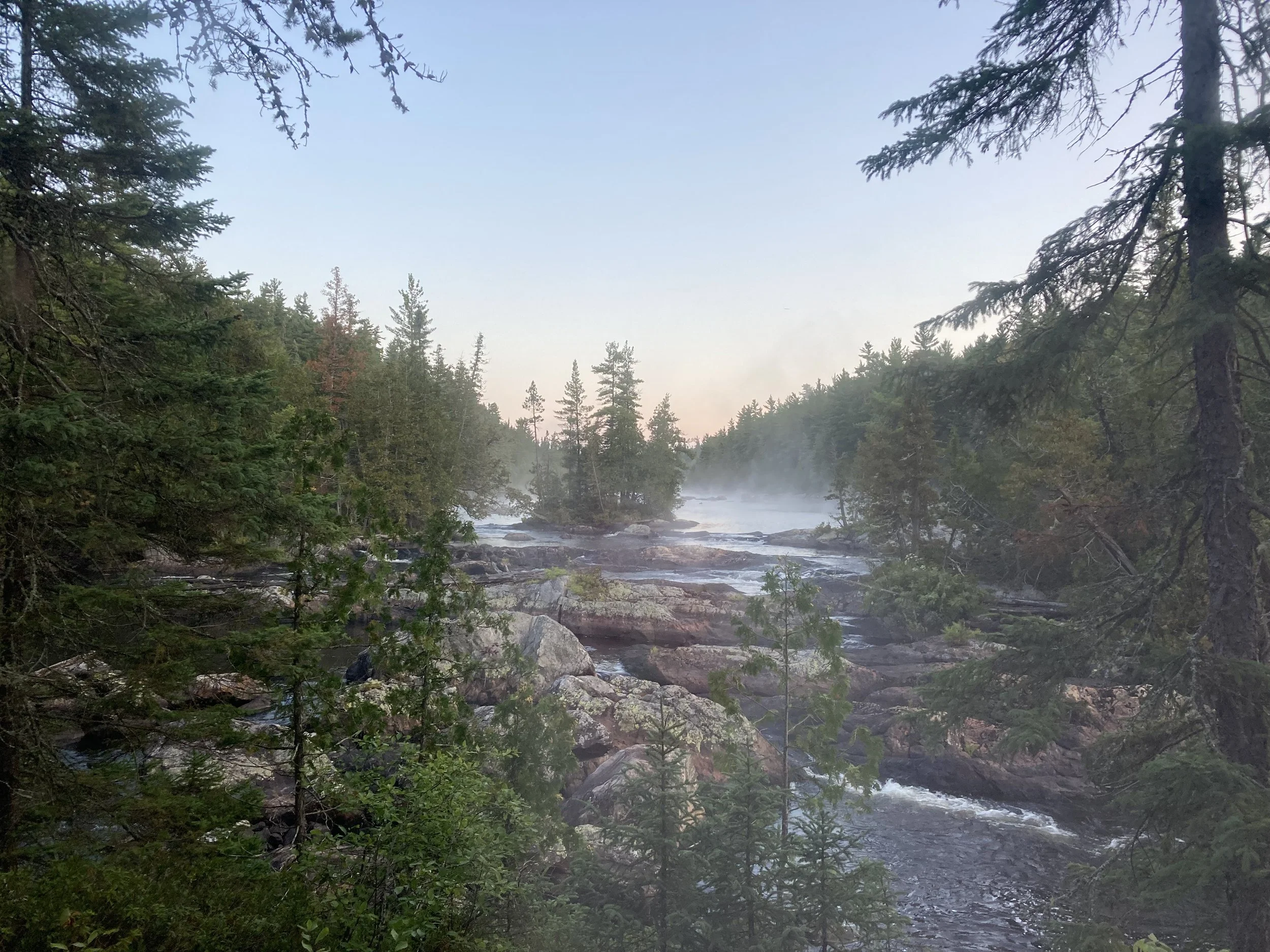
Sunrise: Meditation on Shit.

IMG_0175.JPG

I like the word shit.

It says what I want it to say. Shit. Like, getting it all out.

Like, this is what’s gotten out.

Like, this is what’s being gone through.

People think it’s a swear word. Or, uncultured. Or, whatever.

They rise above this word like somehow they’re better than this word.

Everybody poops. Everybody shits. Everybody goes through shit. Everybody can look at their shit. Everybody creates their own shit. Their shit belongs to them but it also belongs to all of us, because it doesn’t just disappear. It breaks down. It’s everywhere.

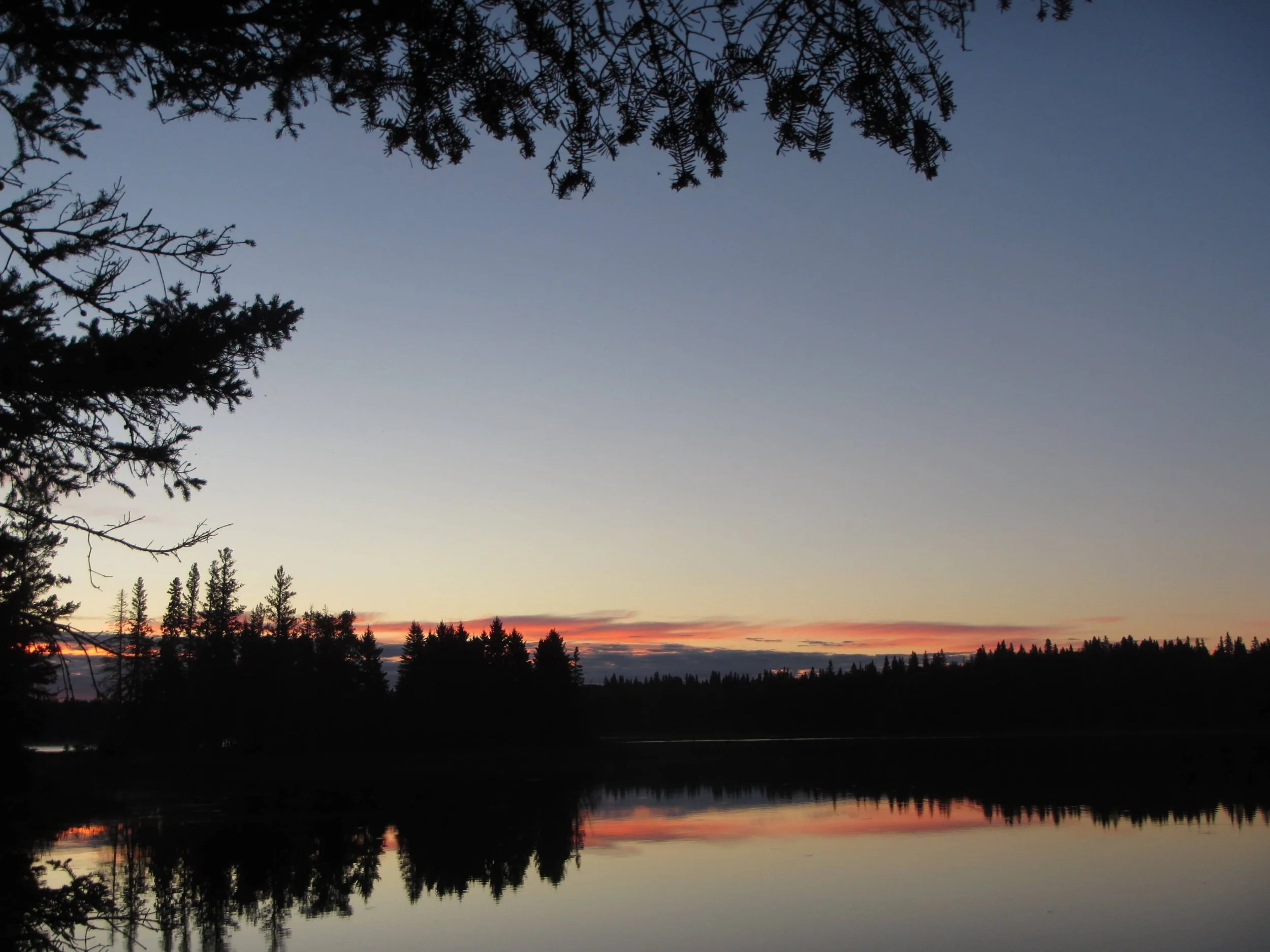
Sunrise: The Gap. The Silence. The Space

IMG_0277.JPG

I refined my thinking after yesterday’s sunrise walk. I posted twice on Instagram in one day. Unusual for me.

Doubt circles through me. Doubt about what to say. Doubt about whether my voice is needed. Two-hundred and fifteen children mass buried in a grave outside the residential school in Kamloops. When I moved to Canada, 19 years old, the first place I lived was Kamloops. I’m not Indigenous.

Do no harm. I’ve been repeating this for a few years now. I want to live my life with doing as little harm as possible.

I’ve been walking around with doubt and do no harm in my head. About posting something on Instagram! We equate speaking out on social media with reaching out to many people, a diverse audience. But, is it?

What would it be to REALLY speak out? What would it be to support and nurture healing of the non-Indigenous people among us so we can truly help and support the Indigenous mothers and grandmothers, fathers and grandfathers, brothers and sisters, aunties and uncles, friends?

This is progress, I think! Instead of worrying about my own self-doubt, I’m worrying about how to help contribute to positive conditions for change.

I will follow with action. I don’t know yet what actions I’ll take.

I’m in the gap.

Conversation with Self. Will this novel write Itself?

We contain multitudes.

Really? Do I contain multitudes?

You are part of the we.

Is The We liberal left or alt-right?

Both.

Liberal left, then.

Hahahahahaha.

I don’t want to read political anything. I want entertainment. Escape.

You want a story?

Without the boring parts. No boring descriptions. No stupid dialogue. Not too many words.

A picture book?

Kinda. Use words, but make them good words. And action. I like action.

Graphic Novel?

Nah. You don’t have to make a graphic novel.

IMG_0398.JPG

Podcast Review: Mitzi Rapkin's Interview with Charles Baxter

Charles Baxter’s novel, The Sun Collective, came of age in November of 2020. A Minneapolis author thoughtful of relationships, politics, and the mysteries of suburbia and small towns, talks about his process.

Baxter notes the novel is one of convergence. An older couple looking for their adult son on the streets and among the homeless, meet a young couple devoted to The Sun Collective. The point of view is shared between Harold and Alma of the older couple and the younger woman of the couple, Christina.

Mitzi: “How do you sit down everyday and bring those thoughts based in real things and put them into characters and a story?”

Charles: “I had to get inside the skins of these characters and I had to talk to them in effect and ask them, what do you want? What are you going to do? Then I had to say to myself, “What kind of interesting trouble are you going to get them into? How long do they have to get into trouble? How big a trouble can they get into?”

Charles: “You just keep working your way through what has to happen. What the characters want for themselves and want for others. If they want something bad, so much for the book. Bad news for the character is good news for the story.”

On reality and realism: “I wanted the novel to have a kind of realistic basis but also to give off the shimmer of the fantastical and the uncanny.”

When you start asking what is reality, you then start to ask a related question, “Whose reality is it? How much of us share that particular view of reality.

“Realism in fiction is meaningful as long as most everyone agrees what reality is. If there is no agreement, than realism for artists, for writers, can’t get a foothold, because everybody seems to have a conflicting view of how the world works, who’s in control of it, whether our actions can bring about real change, or whether mysterious invisible forces are at work, at the controls.”

What is a real world? “The sense that the older couple would like reality to be what it always has been: stable family, kids you can call up any day of the week, predictable things. That sense of realism, of the predictable, and how people behave and what they do has been lost to Christina. She doesn’t believe there’s a shared reality. It’s not available for her.”

As a 70 year old he remembers the feelings of desperation in the late 1960’s. His challenge was to “try to be fair to the feelings of desperation that many people have”, to articulate the way ecology, consumerism, anti-consumerism, anti-racism, impulses for local governments are converging.

On dreams in the novel: “Harry wakes from dreams feeling he has murdered somebody. When he wakes, he can’t remember who he’s murdered, but the feeling really torments him. Other moments in the novel are written as if they’re actually happening but they are dream-like. All writers to some degree bring the unconscious up to the surface when the going gets tough, when characters are at a crisis point. Readers are generally bored by dreams. So I try not to have too many dreams as dreams, but to have scenes as visual and concrete but to seem as if you, yourself are in a dream.”

In discussing why the son left and the sun collective formed, Mitzi asks, “How culpable are we for the feelings and reactions of others we interact with on a daily basis?”

Charles: “If you choose to allow that feeling (culpability) to enter your heart and your soul, if you walk down a city street, if you live in a city like the one I live in and there are homeless people on your route, what do you feel? How do you feel it?”

Charles relates what his civics teacher told him In 1963, “If you walk down the street and you see a poor person sitting on the sidewalk with his hand out and you have contempt, you are a Republican. If you see that person with his hand out and you feel bad about it and you should do something about it, you’re a Democrat.” He explains this is how you talked to high school students to try to explain what is what.

I, too, remember the difference between republicans and democrats being explained to me in this way. Along with conversations around the importance of hard work, of keeping what you own, of treating your neighbour the way you would treat yourself. I grew up confused and unsure about politics, my own safety, and my responsibility.

The Sun Collective, he says, is about this question: If we feel uneasy, what should we do?

My own response to unease has shifted over my lifetime. I remember one of my biggest life lessons came when my son was a teenager and he wanted to go to parties, house parties where parents were not on site. The requests would start on Thursday or Friday night. My instinct was to say, absolutely not. Instead, I learned to ask to speak to the parents who would be on site and I waited. When a phone call did not come, I would be faced with a teenager who told me I was ruining his life and ask me why I couldn’t be like other parents. My response was to tell him I loved him and didn’t want him to be unsupervised at a party where things could get out control. And, I asked a few times, “Why don’t the other parents love their kids as much as I love you?” I never told him that I had been at parties and bad things happened to me. I wonder if it might have made a difference.

Belief is powerful. Perhaps attempting to question where our beliefs come from, to try to make them transparent would be helpful for us all.

Brian Doyle

"Do we salute and honor the way that books so quietly and gracefully become countries and ships and planets, the way they are extraordinary and graceful time machines, the way they hook billions of children on the joy of narrative and imagination? We do not, I think; we take the gift of books and stories a little for granted, because the miracle is so subtle; but pause for a moment yourself, this morning, and think about the books you fell into too, as a child, and when you were interrupted, or when you finished, there was that odd discombobulatory instant when you were not quite sure where you were. A wonderful instant, isn’t it?"

- Brian Doyle

Brian Doyle's novels helped me to understand what it meant to be Canadian. I moved to Canada in 1986, just after my 20th birthday. I went to the Kamloops Library, found the young adult literature section (very small back then) and his books Angel Square and Up to Low were in my first stack. Hey, Dad, the story of Meghan travelling across Canada on a road trip with her family remains in my mind today, especially Meghan's description of the Rocky Mountains (I'd never seen them either until I moved to Canada). This novel was challenged at the time for "negative values." I remember feeling emboldened that books could depict a real life. I re-read all his books when I decided I was going to write a book of my own years later. Spud in Winter and Spud in Sweetgrass are fine books. I also sat in the audience of a workshop he gave in the mid-90s and he gave us the first page of a Charles' Dicken's story and deconstructed all the ways he wrote about snow. I was awake to so much more than I thought possible then. Thanks, Sheena D. Robertson, for this quote. A lovely reminder.

Murmurations. A love of Etymology.

“Chaucer when warning against envy in the in the Parson’s Tale uses the word <murmuration> ‘After bakbitynge cometh grucchynge or murmuracioun..’ (499) in modern English: After backbiting comes grutching or murmurance [grumbling & complaining]. 

From this source we know the word has been attested in English as far back as 1390. We see in the OED it was used in reference to starlings in 1450:’ in PMLA (1936) 51 603 (MED)  ‘A murmuracione of stares’. We analyzed this as <murmur+ate+ion> and as Jin noted above, the base element entered English via Old French meaning ‘sound of human voices, trouble or argument’ from Latin murmurare which has origins in a reduplicated PIE root*mor-mor meaning hum, muttering rushing.

Jin commented on the Greek cognate mormyrien : meaning to boil. When you look at the murmuration clip below you can hear the rushing and see the ‘boiling’ hum of starlings.”

https://www.youtube.com/watch?v=KxfvseECDcs

From: https://wordinquiry.wordpress.com/tag/murmuration/

Murmurations. #1

My first pilgrimage to see a murmuration began at the Esalen Institute, Big Sur, California. I didn’t come to Esalen for the birds, though I met a dozen condors and one particular condor who watched over me at night, greeted me each morning; unfazed by the unzipping of the tent, stationed on a rock not 200 feet away, they cocked their head when I said, “Good Morning.”